Managing gastroesophageal reflux disease
Gastroesophageal reflux diseas (GERD) occurs when stomach acid frequently flows back up into your esophagus — the tube connecting your mouth and stomach. This happens when the valve at the bottom of the esophagus doesn't close properly, or when misalignment of the valve and your diaphragm create a ‘hiatal hernia’. Over time, repeated acid exposure can irritate and damage the lining of the esophagus.
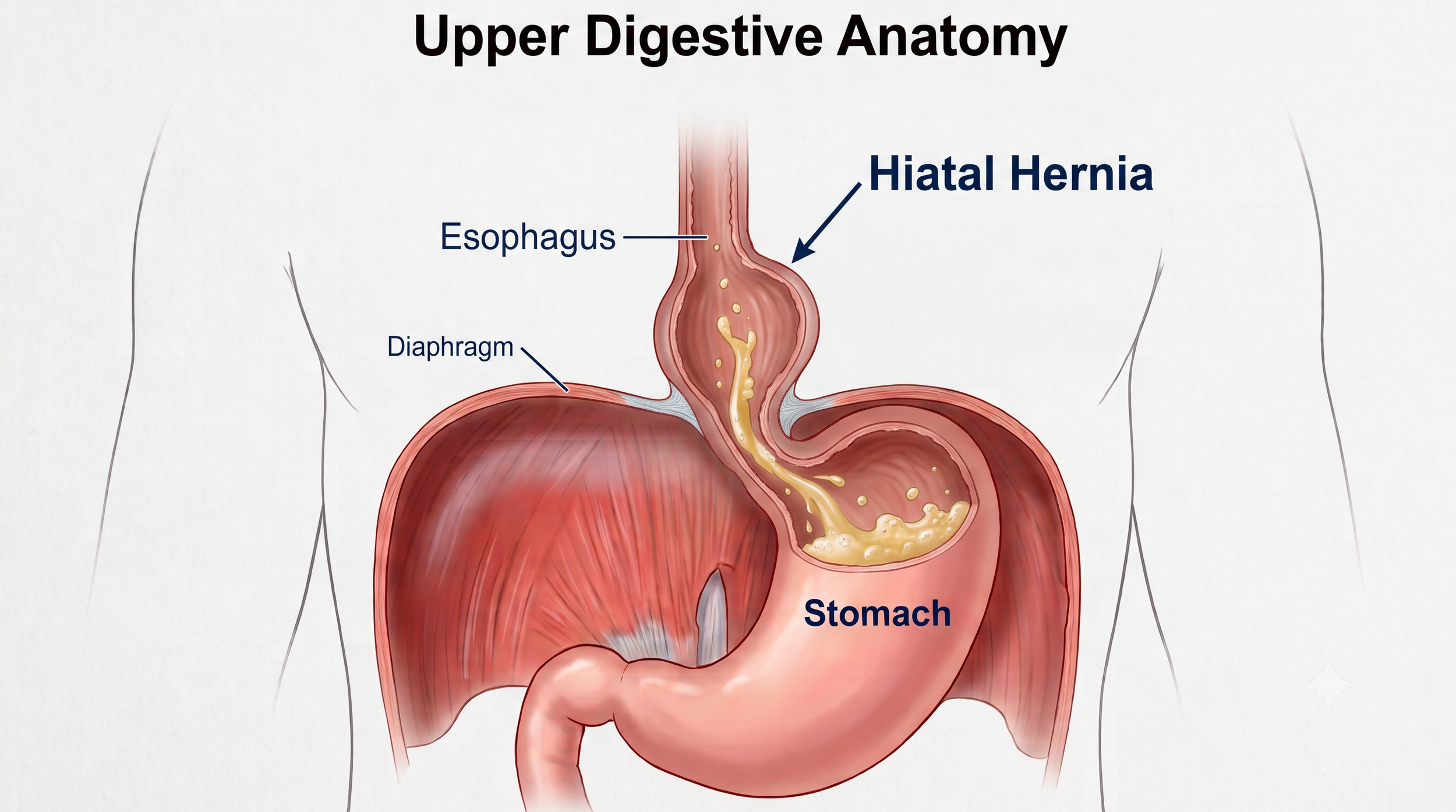
The most common symptoms are heartburn (a burning sensation in the chest) and regurgitation (a sour or bitter taste in the back of the throat). Other symptoms can include difficulty swallowing, chronic cough, hoarseness, or a feeling of a lump in the throat.
GERD is very common, affecting roughly 1 in 5 adults. Risk factors include excess weight, smoking, presence of a ‘hiatal hernia’, and family history.
Lifestyle and Dietary Changes — The Foundation of GERD Management
Making changes to daily habits is one of the most important steps in managing GERD. Many people find significant relief with these strategies alone or alongside medication.
Weight Management
Excess abdominal weight increases pressure on the stomach and pushes acid upward. Even modest weight loss can improve GERD symptoms significantly. Studies show that reducing your BMI by as little as 3.5 points can cut frequent symptoms by about 40%.
How and When You Eat
Stop eating at least 3 hours before bedtime. Late meals are one of the most common triggers for nighttime reflux.
Eat smaller, more frequent meals. Try 4–5 smaller meals throughout the day instead of 2–3 large ones.
Stay upright after eating. Avoid lying down or napping right after a meal. A gentle walk after eating can help.
Sleep Position
Elevate the head of your bed 6–8 inches using bed risers or a foam wedge under the mattress. Extra pillows alone are not as effective because they can bend the body at the waist without keeping the esophagus above the stomach.
Avoid sleeping on your right side. Sleeping on your left side keeps the stomach below the esophagus and reduces nighttime reflux.
Foods and Drinks to Limit or Avoid
Everyone's triggers are different, but common ones include:
Coffee, tea, and caffeinated beverages
Carbonated drinks (soda, sparkling water)
Alcohol
Chocolate and peppermint
Spicy foods
High-fat or fried foods
Tomato-based products (sauce, paste, ketchup)
Citrus fruits and juices
Onions
Tip: Try replacing coffee, tea, or soda with water — even substituting just 2 servings per day may reduce symptoms.
Other Helpful Lifestyle Changes
Quit smoking. People who stop smoking for a year report roughly 44% improvement in GERD symptoms.
Avoid tight-fitting clothing around the waist, which increases pressure on the stomach.
Chew gum after meals to increase saliva production, which helps neutralize acid.
Practice stress-reduction techniques such as deep breathing, meditation, or yoga — stress can worsen reflux symptoms.
Review your medications with your doctor. Some medications — including certain blood pressure drugs, sedatives, and pain relievers — can relax the valve at the bottom of the esophagus and worsen reflux.
Medications
If lifestyle changes alone are not enough, we may recommend medications:
Antacids (e.g., Tums, Maalox): Provide quick, short-term relief by neutralizing stomach acid. Best for occasional symptoms.
H2 Blockers (e.g., famotidine/Pepcid): Reduce acid production and can be helpful for mild to moderate symptoms.
Proton Pump Inhibitors (PPIs) (e.g., omeprazole/Prilosec, pantoprazole/Protonix): The most effective medications for GERD. They block acid production and allow the esophagus to heal. Your doctor will aim to use the lowest effective dose for the shortest needed time.
When Surgery May Be Considered
Surgery is an option for a small number of patients — typically those who:
Cannot tolerate or prefer not to take long-term medications
Have severe symptoms that do not respond adequately to medication
Have a large hiatal hernia or severe esophageal inflammation
The most common procedure is laparoscopic fundoplication, a minimally invasive surgery that wraps part of the stomach around the lower esophagus to strengthen the valve. Another option is the LINX device, a small ring of magnetic beads placed around the esophagus to prevent acid from flowing back up. For patients who are significantly overweight, gastric bypass surgery may treat both obesity and GERD at the same time.
Surgery requires a thorough evaluation beforehand, including endoscopy and other testing. Your gastroenterologist and surgeon will discuss the risks and benefits with you.